

Every builder knows this moment. The demo works beautifully, you show it to a friend, you watch their eyebrows go up, and you start imagining everything it could become. Then real data arrives, with its missing values and its five date formats and its ten thousand rows nobody has looked at in two years, and the demo quietly falls apart.
AI has made the first half of that story remarkably easy. You type what you want in plain English, and tools like Claude Code, Codex and Cursor write working software for you. We love them. The second half, running that software on real data at real size, is still where a lot of good ideas get stuck.
We found that out the hard way, with the best teacher we could have asked for: satellite imagery. Our first product, Fury, is an AI agent that writes and runs its own code to analyze images of the Earth. Making it work on data that huge forced us to build a proper data foundation before anything else, and that foundation is what the new Klarety is built on.
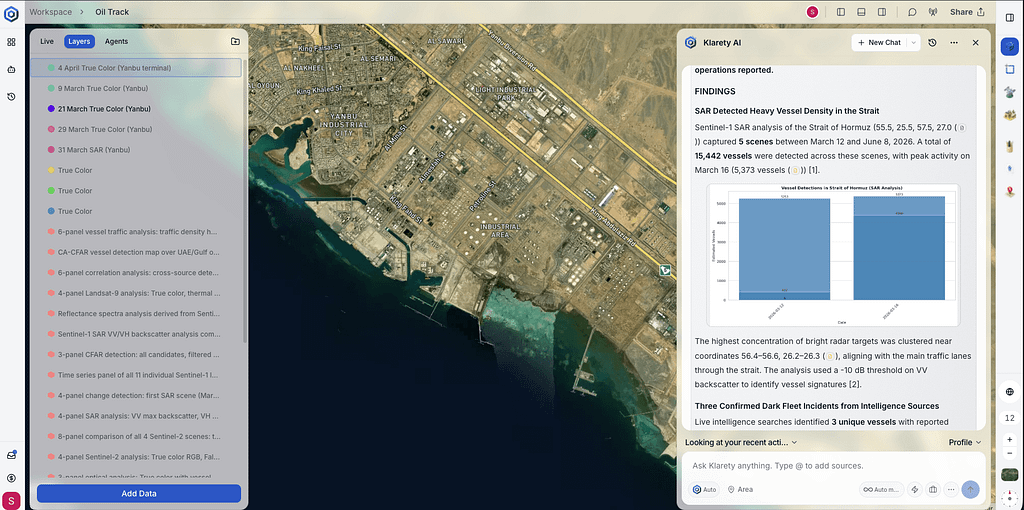
If you've never heard of Klarety, here is the short version: you describe the app or AI agent you want, connect your own data, and build and launch it, no coding required. And Klarety Geo, our satellite and mapping platform, isn't going anywhere. You can still open it today.
What satellite data at scale teaches you about building with AI
Our favorite way to explain this is with a question that sounds easy:
how many ships crossed the Strait of Hormuz last month?
To answer it from space, you first have to find the right images, and one Sentinel-2 tile, a standard unit of satellite imagery, covers about 100 by 100 kilometers. Ordinary optical images fail when clouds block the view, so analysts switch to Sentinel-1 radar (SAR), which sees through cloud but looks nothing like a photograph. Every source has its own resolution, schedule and coordinate system, so before an AI can reason about any of it, everything has to line up on the same map.
This is geospatial data, meaning data tied to places on Earth, and we never get tired of what happens when it works: someone asks a plain-English question about a place, and an AI goes and finds the answer in images taken from space. You can see the kinds of questions Geo handles in templates like SAR vessel density in the Strait of Hormuz, Amazon deforestation change detection and data center construction tracking.
Here is what that work taught us, and it changed how we build everything. When an AI analysis goes wrong, the cause is often upstream of the AI: a stale image, a misaligned layer, a table nobody kept track of. Think of the AI as a fast, talented cook. If the pantry is badly stocked, a faster cook just serves the wrong dish sooner.
What is an AI coding agent, and why does it need a data foundation?
An AI coding agent takes a question in plain English, writes code to answer it, runs that code on real data, checks the output and returns the result. A chatbot can describe an analysis, but an agent actually runs it.
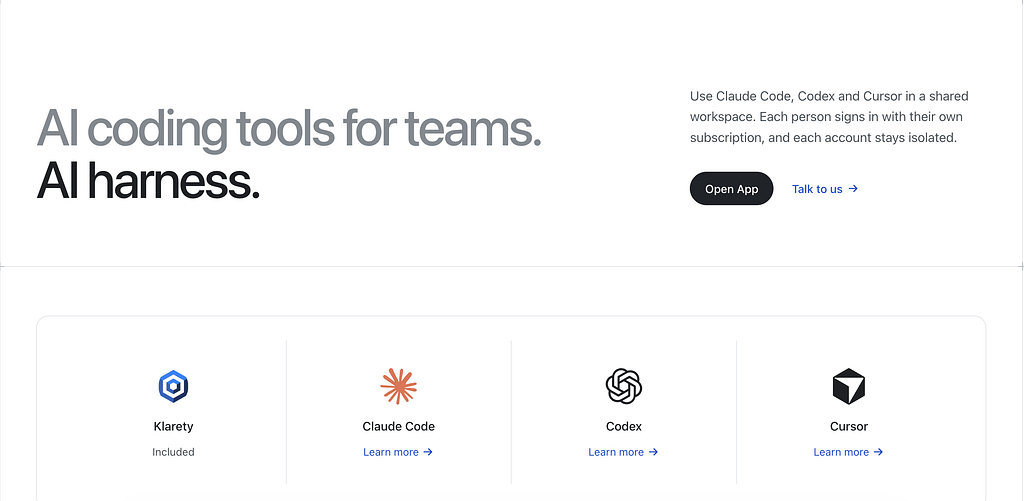
That's what Fury does with satellite data, and it's what Claude Code, Codex and Cursor do for software projects. They're excellent tools, and we built Klarety so you can use them inside it.
Writing the code is the easier half, though. The harder half is giving the agent data it can trust: loaded correctly, cleaned up, versioned so every earlier state is kept, and fenced off so a mistake can't touch what's live. Code written by an agent can be wrong in the same ways code written by a person can, so the system around it has to make mistakes visible and reversible.
Why separate AI tools still leave a gap at scale
None of this is a knock on any single tool. Plenty of good ones each cover one step: one writes code, another reviews it, another hosts it, another stores your files. The trouble tends to show up between them, because each tool sees its own copy of the data and none of them can see what the others changed. It's a bit like four contractors building one house from four different sets of blueprints.
At satellite scale that gap was too expensive to live with, so we closed it: one place where the data lives, and everything else built on that same copy. We think the same holds at smaller scales, only quieter. Honestly, building that foundation is the part of this work we love most.
Nexus: a data platform for AI apps, built before anything else
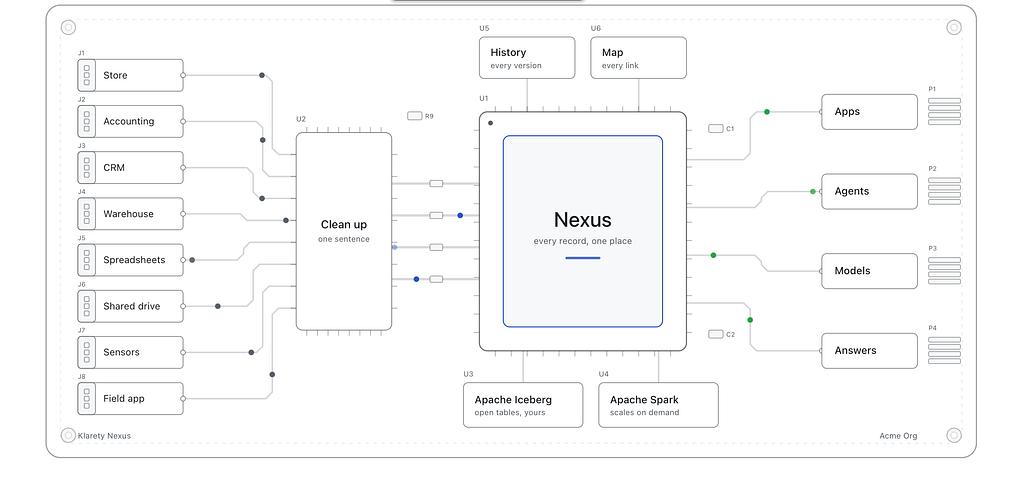
That place is Nexus, and it's the piece of Klarety we're proudest of. You bring in files, databases and exports, about thirty file formats from spreadsheets to maps, and it turns them into clean tables you can question in plain words or in SQL, the standard language for querying data. When a row can't be right, Nexus sets it aside and tells you why, instead of failing the whole load.
Every version of every table is kept, like an undo button for your data. You can see who changed what, a person or the AI, and put it back. Quality checks define what good data looks like, and lineage shows where each table's data came from.
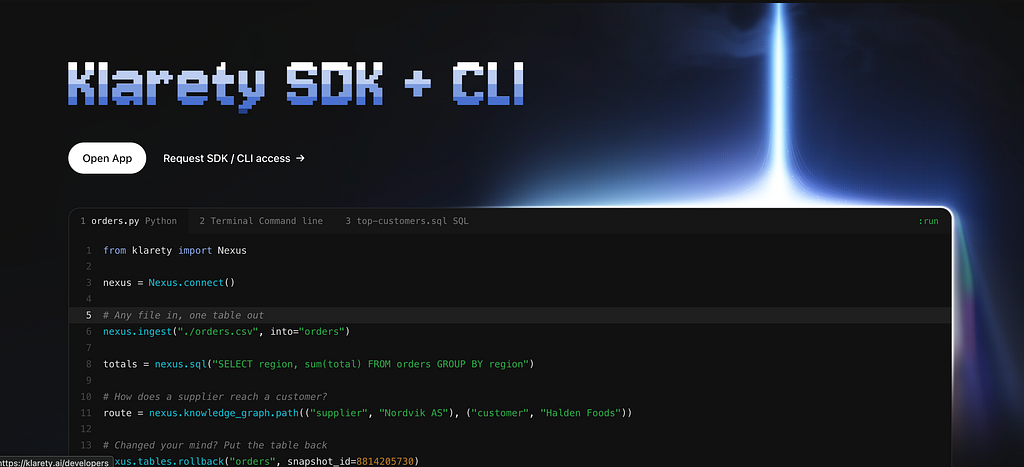
For the engineers in the room: tables are stored in Apache Iceberg on Parquet, open formats that any engine that speaks Iceberg can read, so you aren't locked in. SQL shows an estimated cost before it runs, and the Python SDK and command line cover everything the web app does.
On top sits the knowledge graph, a map that links customers, orders, suppliers and documents so one question can reach all of them.
From Fury to Studio: an AI app builder on one data foundation
At some point we looked at what Fury could do and asked a simple question: why should only people who work with satellite data get to experience this? If an agent can turn a plain-English description into working software on a mountain of data, anyone with an idea and a spreadsheet deserves the same.
There were easier paths. We could have stayed purely geospatial, but then the agent would only ever answer one kind of question. We could have built another drag-and-drop automation tool, but there each step can only do what the tool offers.
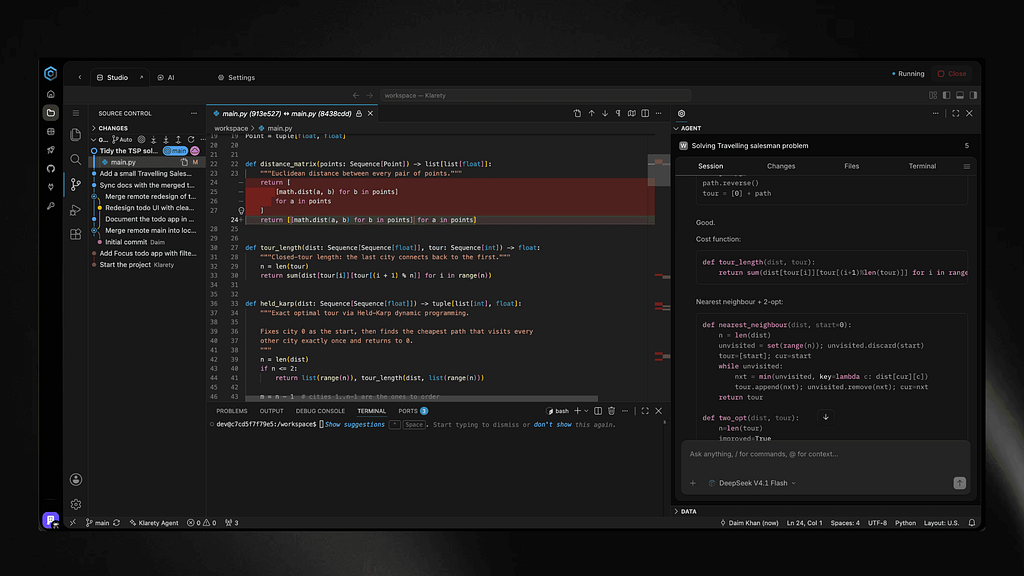
Instead, you describe what you want and Studio builds, tests and explains it. If you like to go deeper, Studio includes a full browser-based code editor with built-in skills. Agents are automations you describe in plain words that run on a schedule or when your data changes, using your tables and knowledge graph as context.
We care a lot about the safety side, because handing an AI the keys to real data should feel calm, not nerve-wracking. Buddy reviews every change the AI makes and explains problems in plain words, like a second pair of eyes. Each run happens in a sandbox, a sealed test area, and anything that would change live data waits for your yes. Deploy keeps a one-click rollback. For engineers, every change is a commit, and every test runs on a private copy of your data, never the live one.
If you'd rather use your own tools, the AI harness brings Claude Code, Codex or Cursor into the same workspace on your own account.
None of this makes AI-written code correct on its own. It makes mistakes easier to see and cheaper to undo, which is the part we can actually promise.
Three questions to ask before you build an AI app on your data
We'd rather you ask these of any tool, ours included:
- Can you see where each table's data came from and who last changed it?
- If the AI makes a bad change, can you restore the previous version in one step?
- What can the AI do without asking, and what has to wait for your yes?
If any answer is "not sure", fix that first. These are the three questions we built Nexus and the sandbox around.
Where Klarety Geo fits now
Geo is where all of this began, and it stays right where it is at geo.klarety.ai. If you want to see what we learned the hard way, open it and ask about a place you know. There are starter templates for financial analysis, agriculture and mining, plus a pricing page, an enterprise page and one for academic research.
The new Klarety is for everything else you want to build on your data. If you have an idea and a messy spreadsheet, you're exactly who we built it for.
Frequently asked questions
We started by helping people understand the world. Now we want to help them build what's next. If the new platform doesn't behave the way we describe it here, tell us through the contact page, because we'd like to hear about it.