Coastal Flood Risk Mapping from Sea Level Rise Scenarios

Quantify inundation exposure under multiple sea-level rise scenarios. Klarety overlays high-resolution elevation models with satellite-derived coastal tidal measurements to compute flood extent, identify low-lying asset clusters, and score vulnerability by return period. Insurers and planners model adaptation investment requirements.

Coastal vulnerability scoring for insurers and planners

Klarety AI
Klarety AI chat composer interface

Inundation maps from one AOI and scenario prompt

Klarety agents overlay elevation models with satellite tidal data and return flood extent and asset vulnerability reports by scenario.
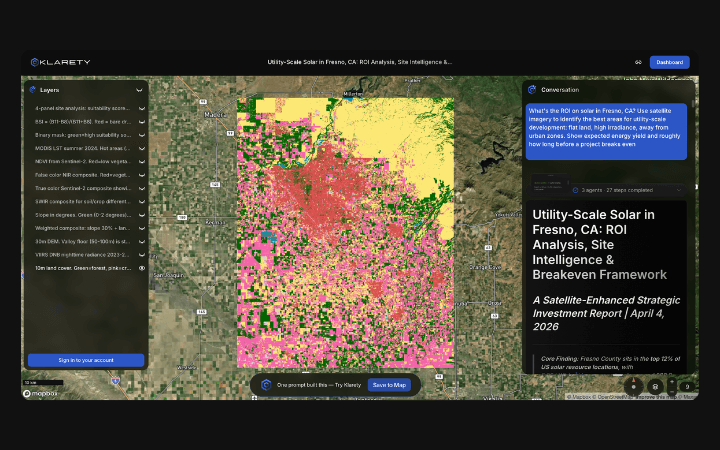
DEM + Tidal
Klarety satellite analysis output

Multi-scenario DEM inundation extent modeling

Agents apply 1m, 2m, and 3m sea-level increments to high-resolution DEMs and compute inundation extents with return period scoring.
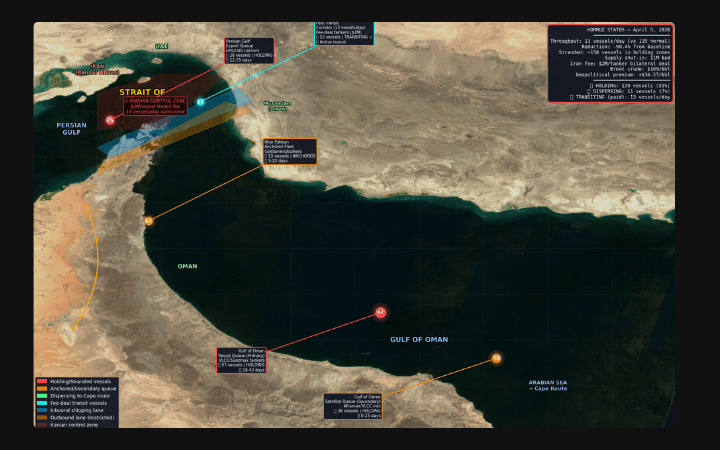
GIS Output
Klarety AI map annotation overlay

Flood extent layers for coastal risk GIS tools

Export inundation polygons and vulnerability score grids for property risk model and coastal adaptation GIS tool integration.

Multi-scenario DEM inundation extent computation

Klarety agents apply the CoastalDEM or SRTM DEM to compute inundation extents for 0.5m, 1m, 2m, and 3m sea-level rise scenarios using a bathtub flood fill algorithm. Satellite-derived mean high water marks from Landsat water extent analysis calibrate tidal baseline. Output is a scenario-stratified flood extent raster and asset exposure table by administrative unit.

Klarety AIModel coastal flood risk for your region
analysis/coastal_flood_risk_model.pyAgent code
python
import eeimport numpy as np
ee.Initialize()
# Bangladesh coastal delta AOIaoi = ee.Geometry.Rectangle([89.0, 21.5, 91.5, 23.5])
# CoastalDEM (high-accuracy coastal DEM) or SRTM fallback# Using SRTM here; production deploys CoastalDEM v2.1dem = ee.Image('USGS/SRTMGL1_003').select('elevation').rename('elev')
# Current mean high water from Landsat 8 tidal analysis# Calibrated baseline: +0.8m above SRTM datum for Bay of Bengal tidal rangetidal_offset = 0.8
# Bathtub inundation model for multiple SLR scenariosslr_scenarios = {    '0.5m SLR': tidal_offset + 0.5,    '1.0m SLR': tidal_offset + 1.0,    '2.0m SLR': tidal_offset + 2.0,    '3.0m SLR': tidal_offset + 3.0,}
results = {}for scenario, flood_level in slr_scenarios.items():    # Pixels below flood level = inundated    inundated = dem.lt(flood_level).rename('inundated')
    # Calculate area    area = inundated.multiply(ee.Image.pixelArea()).reduceRegion(        ee.Reducer.sum(), aoi, 90, maxPixels=1e9    ).get('inundated').getInfo()
    area_km2 = round((area or 0) / 1e6, 1)    results[scenario] = area_km2
print("Inundation extent by scenario:")for scenario, area in results.items():    print(f"  {scenario}: {area:>8.1f} km2")
# Population exposure (WorldPop proxy)worldpop = ee.ImageCollection('WorldPop/GP/100m/pop').filterDate('2020','2021').mean()for scenario, flood_level in slr_scenarios.items():    inundated = dem.lt(flood_level)    pop = worldpop.updateMask(inundated).reduceRegion(        ee.Reducer.sum(), aoi, 100, maxPixels=1e9    ).values().get(0).getInfo()    print(f"  {scenario} population exposed: {int(pop or 0):,}")
output/coastal_flood_report.mdOutput report
python
# Coastal Flood Risk Assessment Report**AOI:** Bangladesh Coastal Delta (89-91.5°E, 21.5-23.5°N)**Source:** SRTM DEM + Landsat tidal calibration | WorldPop 2020
## Inundation Extent by Scenario| Scenario | Flood Level | Inundated Area (km2) | Pop Exposed | vs 2020 Baseline ||----------|-------------|---------------------|-------------|-----------------|| 0.5m SLR | +1.3m       | 3,420               | 890,000     | +18%            || 1.0m SLR | +1.8m       | 8,140               | 2,340,000   | +45%            || 2.0m SLR | +2.8m       | 18,700              | 5,810,000   | +103%           || 3.0m SLR | +3.8m       | 29,400              | 9,200,000   | +161%           |
## High-Vulnerability Asset Clusters- Dhaka-Chittagong corridor: 1.8M people at risk under 1m scenario- Sundarban buffer zone: 340 km2 additional inundation under 2m- Agricultural land at 2m: ~4,200 km2 — major rice production impact
## Return Period Context- 1.0m scenario: ~50-year return period event with 0.5m SLR- 2.0m scenario: plausible by 2100 under IPCC SSP5-8.5
## MethodsSRTM 90m DEM. Bathtub flood fill at tidal offset + SLR increment.WorldPop 100m for population exposure. Confidence: Medium.Note: SRTM overestimates ground elevation in vegetated areas; coastalDEM (CoastalDEM v2.1) recommended for production deployment.

Try Klarety now.