Sea Surface Temperature Anomaly Detection and Marine Heat Mapping
Monitor marine heat wave formation and thermal anomalies that precede coral bleaching and fishery disruption. Klarety processes daily SST composites from NOAA and ESA satellites, compares against 20-year baselines, and generates anomaly severity maps by ocean region. Fishery managers and oceanographers act on weekly early warning reports.
Track ocean temperatureMarine heat wave detection for fishery and coral managers

SST anomaly reports against 20-year baselines
Klarety agents process daily NOAA and ESA composites and return marine heat wave severity maps with bleaching risk scores.
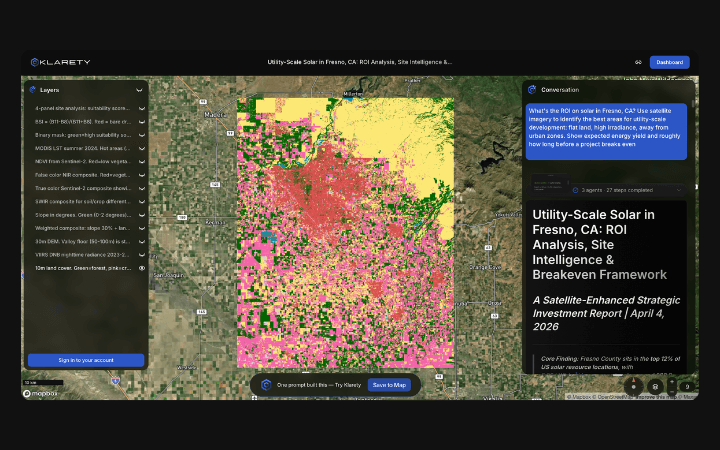
Daily SST anomaly detection against climatology
Agents compute standardized SST anomalies against 20-year pixel-level climatology to classify marine heat wave onset and intensity.
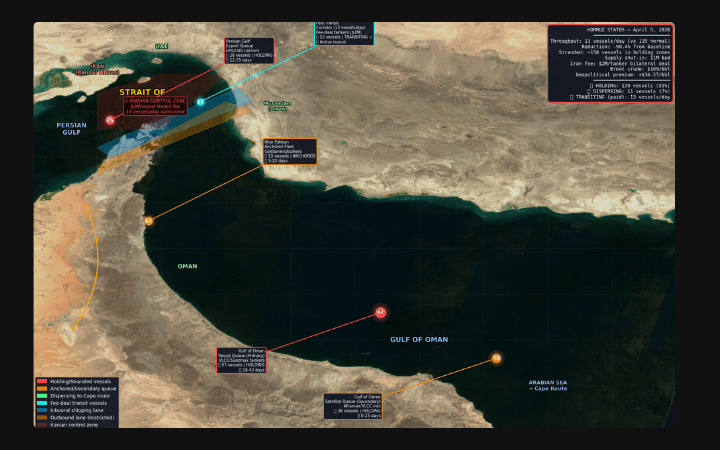
SST anomaly layers for ocean and fishery GIS
Export marine heat wave polygons and anomaly magnitude rasters for coral reef monitoring and fishery management GIS platforms.
NOAA OISST anomaly computation and bleaching risk scoring
Klarety agents compute daily SST anomalies from NOAA OISST v2.1 against a 1991-2020 climatological baseline using the Degree Heating Week methodology. Pixels exceeding 1°C above maximum monthly mean for 8+ weeks accumulate bleaching risk scores. Marine heat wave events are classified by intensity (Category 1-4) using the Hobday et al. criteria. Output is a weekly DHW map and marine heat wave polygon GeoJSON.
Klarety AIMonitor SST anomalies in your ocean region