Urban Heat Island Mapping and Tree Canopy Analysis
Identify which city districts run hottest and where green infrastructure will cool them most. Klarety processes Sentinel-2 thermal and vegetation indices to produce heat island severity maps correlated with tree canopy density and impervious surface cover. Planners target tree-planting and park investment at maximum thermal impact zones.
Map heat islandsHeat island severity mapping for city planners

Thermal risk maps for any city from one prompt
Klarety agents process Sentinel-2 thermal and vegetation indices and return heat island severity maps with canopy correlation.
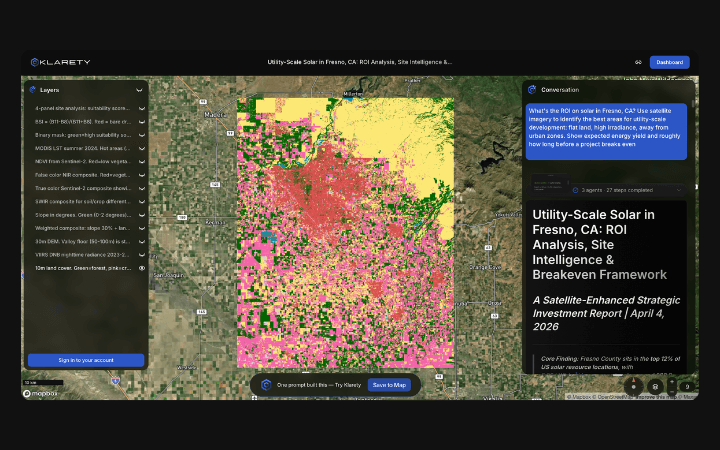
Land surface temperature and canopy cooling scoring
Agents compute LST and tree canopy density to score which districts benefit most from targeted green infrastructure investment.
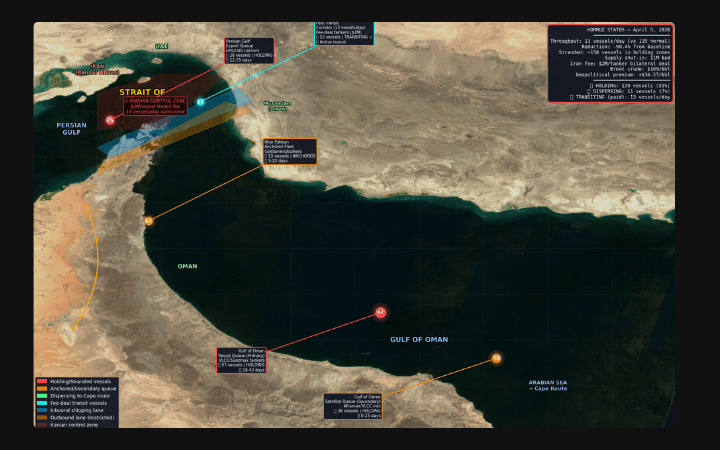
Thermal and canopy layers for urban GIS analysis
Export LST rasters and canopy density grids for urban heat mitigation model and city planning GIS tool integration.
LST and NDVI heat island severity scoring
Klarety agents derive land surface temperature from Landsat 8 Band 10 thermal infrared, compute NDVI canopy density from Sentinel-2, and map the negative correlation between canopy cover and LST at district level. Districts with high LST and low canopy are ranked for green infrastructure intervention priority. Output is a district-level heat vulnerability table and LST-canopy overlay raster.
Klarety AIMap heat islands in your city